No One Can Tell You What You Need: The Deeply Personal Truth Behind 'Essential'
The List That Started an Argument
Somewhere on the internet right now, someone is publishing a list of essentials. Thirty items. Maybe fifteen. Perhaps a bold, aspirational ten. The comment section underneath will be, as it always is, a small war.
But what about kids? What about winter? What about people who actually cook?
And they're right. All of them. That's the uncomfortable part.
Minimalism has spent a decade and a half promising us clarity — a cleaner home, a quieter mind, a life that finally makes sense. And in a lot of ways, it delivers. But its most foundational question — what is essential? — turns out to be less a destination and more a mirror. Whatever answer you land on says almost nothing universal and almost everything personal.
The Word 'Essential' Is Doing a Lot of Heavy Lifting
When we say something is essential, we mean it's necessary. Non-negotiable. Can't-live-without. But necessary for what, exactly?
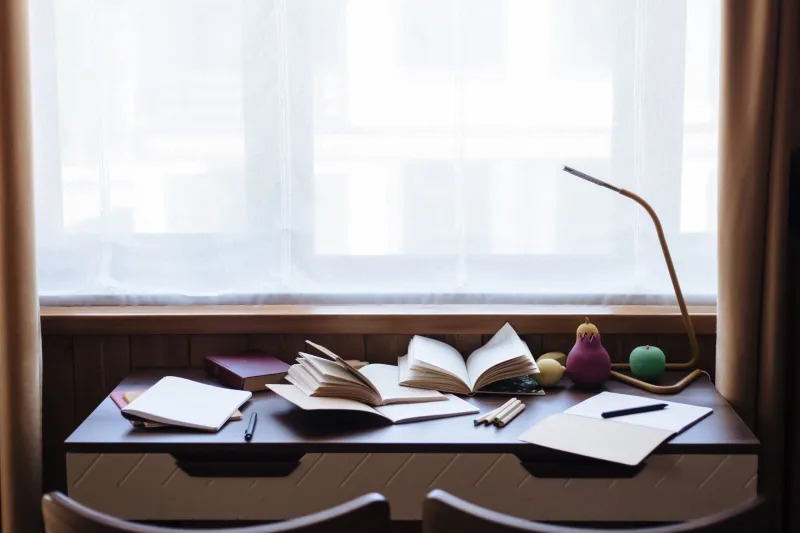
A novelist living alone in a one-bedroom in Portland might genuinely need a good desk lamp, a French press, and a reliable pair of headphones. That's not performance — that's the infrastructure of her actual days. Strip those out and you've taken something real.
A father of three in suburban Ohio needs something else entirely. A minivan that fits hockey gear. A kitchen table big enough for homework. A second bathroom, if he's being honest with himself, that is absolutely essential to the survival of his marriage.
A remote worker splitting time between a small apartment and her parents' house in the same city needs a different list again — portable, flexible, designed for a life that doesn't quite fit one address.
None of these people are wrong. None of them are failing at minimalism. They are just living different lives, and their essentials are shaped by the specific weight of those lives.
Why We Keep Reaching for Someone Else's List
Here's the thing about universal lists: they're comforting. There's something deeply appealing about the idea that a smarter, more intentional person has already done the hard work of figuring out what matters — and that you can just copy their answers.
It saves you from having to ask the harder question, which isn't what do I need? but what kind of life am I actually trying to live?
That second question is the one most of us are quietly avoiding. Because it requires admitting things. That you haven't fully committed to the city you're in. That the hobby you bought equipment for three years ago still hasn't become a real part of your life. That some of what you own is aspirational — purchased for the person you planned to become rather than the one you actually are.
Someone else's essentials list lets you sidestep all of that. You can optimize without examining.
The Anxiety Embedded in Every 'Capsule'
Spend enough time in minimalist spaces — online or in print — and you'll notice a particular kind of anxiety running underneath the aesthetic calm. It shows up in the obsessive recounting of item counts. In the slightly defensive tone of I only own X pairs of shoes. In the comment threads where people challenge each other's choices like they're defending a thesis.
This isn't really about objects. It's about the fear that you're doing life wrong. That you want too much. That your needs are excessive or embarrassing.
Minimalism, at its best, is supposed to free you from that anxiety. But when we outsource the definition of essential to someone else, we just swap one form of comparison for another. Instead of keeping up with the Joneses, we're keeping up with some anonymous person's capsule wardrobe, quietly measuring our own needs against a standard that was never meant for us.
What Japanese Design Philosophy Actually Suggests
There's a concept in Japanese aesthetics called ma — often translated as negative space, or the pause between things. It's not emptiness for its own sake. It's intentional space that gives meaning to what surrounds it.
The objects in a well-considered Japanese interior aren't there because someone decided the minimum number of things that could occupy a room. They're there because someone asked: what does this space need to feel like itself?
That's a fundamentally different question than how little can I get away with?
It allows for the possibility that your space — your life — might genuinely need more than your neighbor's. That a musician's studio and a meditator's reading room have different requirements, and both can be considered, intentional, and free of clutter without being identical.
The goal was never sameness. It was clarity.
Accepting the Contradiction
The honest version of minimalism starts with a kind of surrender — not to having less, but to the reality that your definition of enough is going to be yours alone.
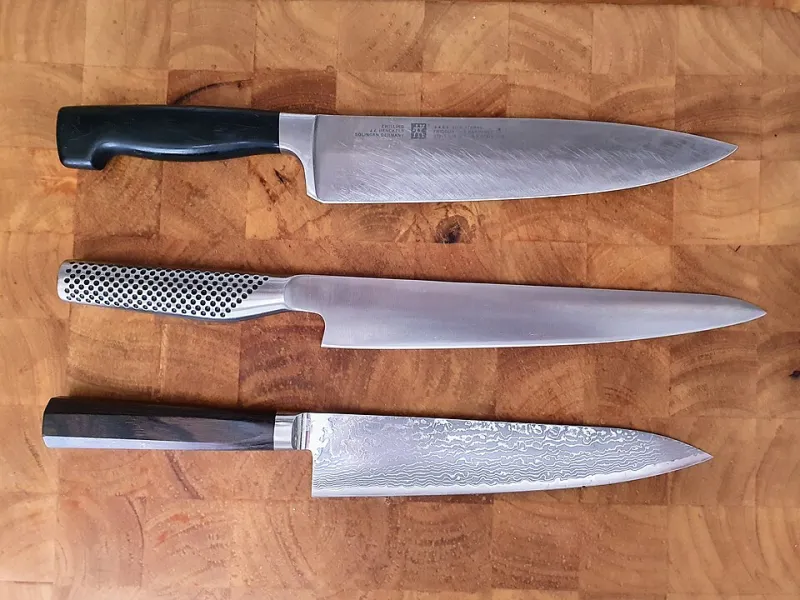
Your kitchen might need more than three knives. Your closet might need real seasonal variety if you live somewhere with actual winters. You might need a car that doesn't make minimalist sense on paper but makes complete sense for your life. You might need things that don't photograph well and don't fit in a flat lay and would never make it onto anyone's essentials list — but that quietly hold your days together.
None of that is a failure. It's just honesty.
The more interesting practice isn't finding the universal minimum. It's developing enough self-knowledge to distinguish between what you genuinely rely on and what you're holding onto out of habit, guilt, or the vague hope that you'll become someone slightly different than you are.
That gap — between what you actually need and what you've accumulated — is where the real work lives. And no one else's list can show it to you.
The Question Worth Asking
So maybe the point isn't to arrive at a final, defensible inventory of essentials. Maybe the point is to keep asking the question with enough honesty that it stays useful.
Does this belong in my life as it actually is — not as I imagine it, not as I hope it might become, but right now, today?
That question will give you different answers at different times. When you move. When your kids grow up. When your job changes or your city changes or you do.
And that's fine. The list was never supposed to be permanent. It was supposed to be true.
Start there.