What the Empty Wall Is Actually Telling You
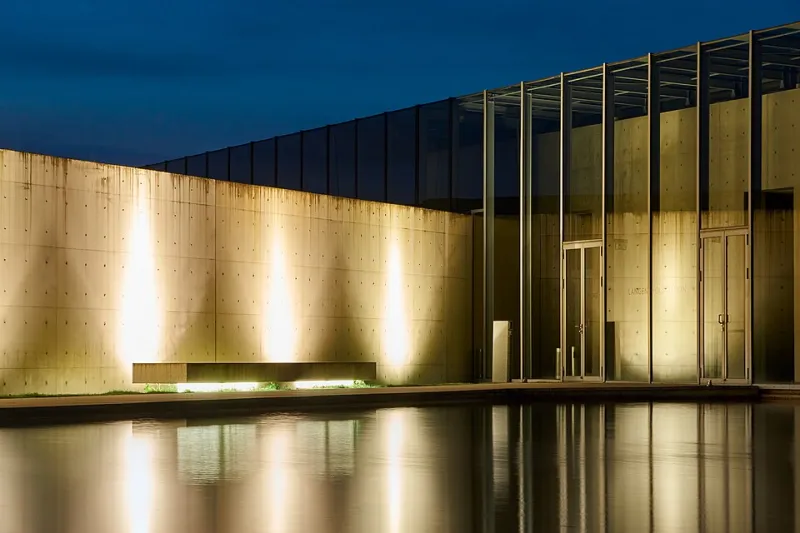
Photo: Anil Öztas, CC BY-SA 4.0, via Wikimedia Commons
Somewhere along the way, American homes got a rule nobody wrote down: if there's a blank wall, fill it. A gallery arrangement, a floating shelf, a oversized canvas from a big-box store. Empty space started reading as unfinished — like a sentence without a period, a room that hadn't quite made up its mind yet.
But here's the thing. In Japanese design, that blank wall isn't waiting for something. It already is something.
Ma: The Space Between Things
The Japanese word ma (間) doesn't translate cleanly into English, which is probably part of why it took so long to land in Western design conversations. It's often described as "negative space" or "pause," but those definitions flatten it. Ma is less about absence and more about the charged quality of what sits between things — the breath between musical notes, the stillness before a response, the open area beside a single ceramic vase that makes the vase feel important.
In architecture and interior design, ma is intentional. It's the decision to leave a wall bare not because you haven't gotten around to decorating it, but because that openness is doing real work. It gives the eye somewhere to rest. It creates contrast that makes the objects you did choose feel considered rather than crowded.
For most of us raised in the American tradition of more-is-more home décor — the layered gallery walls, the shelves packed with books and trinkets and framed photos — this takes some mental rewiring.
Why Filling Everything Feels So Natural
There's a reason we reach for the next frame or the next plant or the next decorative object the moment a surface clears. Psychologists call it horror vacui — literally, the fear of empty space. Studies have suggested that people in Western cultures tend to associate fullness with abundance and warmth, while emptiness can feel cold, incomplete, even a little sad.
And then there's the social layer. Pinterest boards. Instagram home accounts. The quiet pressure to have a space that looks styled, that photographs well, that signals taste through visible accumulation. We've been conditioned to perform our homes rather than simply live in them.
Ma asks you to do something genuinely countercultural: trust the empty space. Believe that what you leave out is as meaningful as what you put in.
What Emptiness Actually Does to a Room
Here's the practical side of it. Walk into a room where every surface is covered and every wall is hung. Your eye doesn't know where to land. It moves constantly, restlessly, taking inventory. You might not consciously register it, but that visual busyness translates into a low-grade mental noise — a kind of ambient stimulation that never quite lets you settle.
Now walk into a room with one piece of art on a large, otherwise bare wall. A single low table. One plant in a handmade pot on the windowsill. Suddenly your eye has somewhere to stop. You notice things. You feel the room rather than just see it.
This is ma working. The emptiness isn't passive — it's amplifying everything around it.
Researchers at Princeton have found that visual clutter competes for your brain's attention and measurably reduces your ability to focus. Reducing the number of objects your eye has to process isn't just an aesthetic preference. It's a form of mental housekeeping.
How to Start Practicing It in Your Own Home
You don't have to gut your living room or commit to a Zen monastery aesthetic. Ma is about intention, not minimalism as a style performance. Here are a few entry points:
Take one thing down. Pick the wall you walk past most often — a hallway, the wall above a couch — and remove one piece from it. Live with the gap for two weeks before deciding whether it needs to be filled. Notice what happens to the rest of the wall.
Give your best objects more room. If you have a piece you genuinely love — a painting, a ceramic, a framed print — consider whether it's surrounded by too much competition. Objects need breathing room to be seen. Clear the space around them and see whether they start to mean more.
Resist the urge to decorate a corner. Corners in particular attract objects — floor lamps, plants, small tables, stacked books. Try leaving one corner completely empty. The emptiness will feel strange at first. Then it will feel like a decision.
Treat negative space as furniture. This is the core ma shift. Start thinking of open floor space and bare wall sections not as gaps to be filled but as elements you're actively placing. You're not leaving the wall empty because you haven't gotten around to it. You're choosing it.
The American Home Is Ready for This
There's a quiet shift already happening. You can see it in the move away from maximalist gallery walls toward single, larger pieces with generous surrounding space. In the growing preference for furniture that sits low and doesn't crowd a room visually. In the renewed interest in natural materials — linen, wood, stone — that don't demand attention so much as quietly hold it.
Americans are starting to understand, slowly, that a considered space doesn't mean a full one. That restraint is its own kind of confidence. That when you stop filling every surface, the things you choose to keep start to matter in a way they couldn't before.
Ma isn't a design trend. It's a different way of understanding what space is for — not a container to be packed, but a presence in its own right. Your empty wall isn't waiting for a print. It might already be the best thing in the room.