Real Quiet Luxury Has Nothing to Do With Money—It's About Restraint
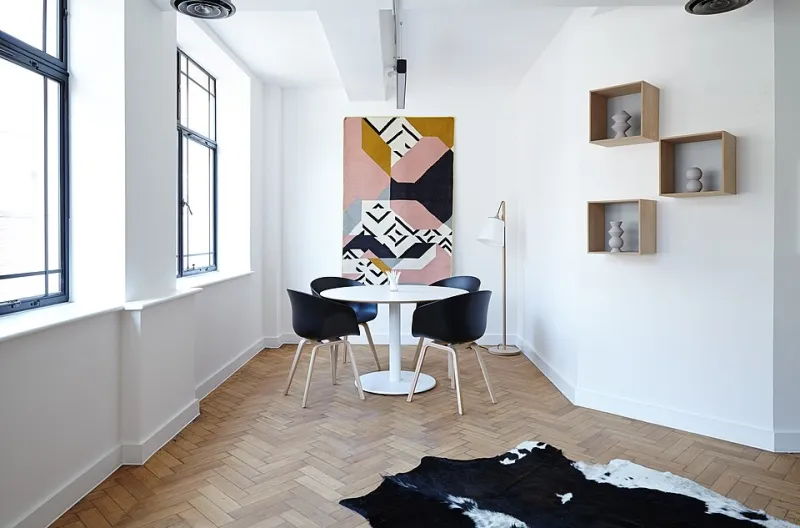
Photo: Breather breather, CC0, via Wikimedia Commons
Let's be honest about what's happening with "quiet luxury" right now.
Somewhere between the HBO costume department and a thousand TikTok styling videos, a genuinely interesting idea got turned into a shopping category. Camel coats. Cashmere. Understated logos. The aesthetic language of old money, packaged and sold back to us as a personality.
And look—some of those pieces are beautiful. But what's being called quiet luxury is, in most cases, still luxury performing for an audience. It's just performing more subtly. The flex is still the point. The price tag is still the signal. We've just agreed to whisper it instead of shout.
That's not restraint. That's just a different kind of noise.
What Restraint Actually Looks Like
The objects and spaces that genuinely stop you—that feel considered in a way you can't immediately explain—almost never announce themselves.
Think about the best-designed kitchen you've ever been in. The one where everything was easy to find, where the counters had room to breathe, where the light hit the surfaces in a way that made you want to linger. Chances are it didn't have the most expensive appliances. It had the right ones. Positioned correctly. With nothing extra cluttering the story.
Or think about a piece of clothing that's lasted a decade and somehow still feels right. Not because it was the most expensive thing you owned, but because it was made with enough integrity that it never needed to trend. It just continued to be itself.
That's what restraint does. It lets the object exist on its own terms instead of propping it up with context.
The Problem With Performing Taste
We live in a moment when taste has become a personal brand. What you own, how you arrange it, which aesthetic you align with—all of it is legible to an audience, whether that audience is your Instagram followers or just the people who come to your apartment.
And there's nothing inherently wrong with caring about how things look. Design matters. Aesthetics shape how we feel in a space. This whole site is built on the belief that considered objects make for a more considered life.
But there's a difference between choosing things because they work—because they're right for the space, right for your life, right in the way a well-made tool is right—and choosing things to signal that you're the kind of person who chooses things like that.
One is design. The other is theater.
Japanese design philosophy, which informs so much of what we're drawn to here, has a word that gestures toward this: wabi-sabi. It's often translated as finding beauty in imperfection, but there's something else embedded in it—a resistance to performance. A wabi-sabi object doesn't try to impress you. It just exists, with all its honest marks of use and time. And somehow that's more compelling than anything polished and posed.
Restraint in Storytelling
Here's the thing that separates genuinely refined design from expensive design: what it leaves out.
A room with one beautiful object placed with intention tells a story. A room crowded with beautiful objects tells nothing—or rather, it tells you that the person who lives there is very busy making sure you notice how many beautiful objects they own.
The same principle applies to how we dress. A single well-made piece worn with confidence communicates more than an outfit assembled to demonstrate range. It says: I know what I like. I don't need to prove anything.
Restraint in storytelling means trusting the thing itself to carry the weight. It means resisting the urge to add one more element, one more layer of context, one more proof point. It means editing not just what you own, but what you show—and how much explanation you feel compelled to offer.
When you stop performing your taste, something interesting happens. You stop needing to buy things that perform on your behalf.
Practical Examples From Everyday Spaces
This doesn't require a designer's budget or a renovation. It requires a different question.
Instead of asking "what should I add to this shelf?" ask "what can I take away and still have it feel right?" Instead of "how do I make this room look more elevated?" try "what is this room actually trying to do, and is everything in it serving that?"
A single ceramic mug you use every morning—one that fits your hand well, that holds heat, that you'd genuinely miss if it broke—is more luxurious in the truest sense than a cabinet full of mugs you rotate through indifferently. A linen throw that you actually pull over yourself on cold evenings means more than three decorative ones draped for a photo.
The everyday items that make you feel rich aren't the ones that cost the most. They're the ones that do exactly what they're supposed to do, without asking for your attention.
The One Thing
If quiet luxury has a real version—a version worth caring about—it's this: the willingness to stop explaining yourself through your things.
Not because you've transcended materialism or achieved some enlightened state. But because you've gotten clear enough on what you actually value that you don't need the objects to do the social work for you.
That kind of restraint isn't a price point. It's a practice. And it's available to anyone willing to ask, before they buy or display or arrange anything: Is this for me, or is this for the version of me I want other people to see?
The honest answer to that question is where real refinement begins.