Minimalism Was Never About Having Less — It's About Feeling More
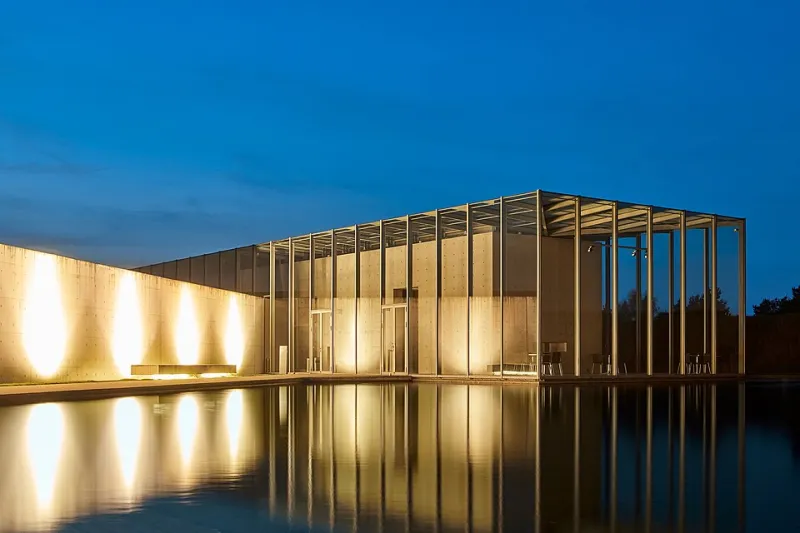
Photo: Anıl Öztaş, CC BY-SA 4.0, via Wikimedia Commons
Somewhere between the viral Netflix special and the tenth thinkpiece declaring that "decluttering culture has gone too far," minimalism got a reputation it probably doesn't deserve. Critics started calling it cold. Performative. A luxury hobby for people with too much time and not enough personality. And honestly? Some of that criticism lands — just not where people think it does.
The minimalism that's getting dragged online isn't really minimalism. It's minimalism's anxious, overachieving cousin: the version that treats empty surfaces as a moral achievement and measures self-worth in donation bags.
There's a quieter, older tradition that works very differently — and it's been sitting in plain sight the whole time.
What Ma Actually Means (And Why It Matters)
In Japanese aesthetics, there's a concept called ma (間). It's usually translated as "negative space" or "pause," but those translations flatten something richer. Ma isn't the absence of something. It's the quality of the space between things — the breath a room takes, the silence between notes in a song, the moment before a conversation continues.
Architects, musicians, poets, and everyday people in Japan have been working with ma for centuries. It shows up in the deliberate gap between sliding shoji screens, in the way a single ceramic bowl is placed on a table rather than surrounded by clutter, in the unhurried pacing of a tea ceremony. The point isn't emptiness. The point is that what remains gets to breathe — and so do you.
That's a fundamentally different goal than "own fewer things."
When Western minimalism went mainstream around 2015, it borrowed the aesthetic vocabulary of ma without fully importing the philosophy. The result looked similar on Instagram but felt different in practice. Suddenly, minimalism wasn't about creating space for what you love — it was about proving you could live without things. The joy got edited out.
The Problem With "Does It Spark Joy?"
Marie Kondo didn't invent this problem, but the global phenomenon around her KonMari method accidentally accelerated it. To be clear: Kondo's actual work is nuanced, deeply personal, and rooted in a genuine Shinto-influenced respect for objects. Her books are worth reading.
But the cultural shorthand — the meme version — reduced a thoughtful practice to a single question and a pile of garbage bags. People started applying it like a prescription, not a philosophy. And when the prescription made their homes feel sterile instead of serene, they blamed minimalism.
Designers who work in the Japanese tradition will tell you that Kondo's backlash is a category error. "People got rid of things and expected to feel free," says one Brooklyn-based interior consultant who spent years studying spatial design in Kyoto. "But freedom isn't the absence of objects. It's the presence of intention."
Intention is the word that keeps coming up.
Building a Wardrobe That Reflects You, Not a Trend
Let's get practical for a second, because philosophy is only useful when it changes how you actually live.
A considered wardrobe — the kind that feels genuinely good to open every morning — isn't defined by a number. It's not a capsule wardrobe of 33 items or a color palette limited to oatmeal and grey. It's a collection of things that work together because you work together with them. They fit your actual life, not an aspirational version of it.
Here's where ma becomes useful as a design principle rather than a decoration choice: when you create space around each item — literal space in your closet, but also mental space in how you think about it — you start to notice what you actually reach for. What gets worn. What sits untouched for a season and then another.
That awareness is more valuable than any decluttering checklist.
Some questions worth sitting with:
- Does this item work with at least three other things I already own? Not in theory — in actual outfits you'd put on.
- Would I buy this again today? Not "did I love it when I bought it" but right now, with what you know.
- Does owning this require me to own other things I don't want? (The formal blazer that demands formal trousers that demand formal shoes — you know the cycle.)
The goal isn't fewer clothes. It's a wardrobe where nothing is in the way of anything else.
Your Home Doesn't Have to Look Like a Gallery
One of the most persistent myths about minimalist interiors is that they require white walls, concrete floors, and a single orchid in a matte black pot. That's a style — a valid one — but it's not a philosophy.
Ma can exist in a warm, book-filled apartment in Chicago. It can exist in a family home in Austin with kids' artwork on the fridge. It's not about removing evidence of your life. It's about arranging your life so that what you love has room to register.
Practically, this might mean:
- One surface in your main living area stays clear. Not as a rule, but as a choice. A coffee table with breathing room reads differently than one buried under remotes and old magazines.
- Group objects with intention. Three things arranged thoughtfully on a shelf create a moment. Twelve things in the same space create noise. Neither is morally superior — but one is easier to actually see.
- Let functional things be beautiful. Japanese design has always understood that a well-made kitchen knife or a ceramic mug you love is not separate from your aesthetic life. Useful things can be the things you cherish.
What You Keep Is the Statement
Here's the reframe that changes everything: minimalism, done right, isn't about what you get rid of. It's about what you decide is worth keeping.
That shift in emphasis changes the emotional register entirely. Discarding feels like loss. Choosing feels like agency.
The ma approach asks you to look at your home and your closet and your life not as problems to be solved through subtraction, but as compositions. What note do you want to be heard? What do you want to have room to notice?
Maybe that's a collection of vintage ceramics that brings you genuine happiness every time you walk past. Maybe it's a reading corner with exactly the books you're working through right now. Maybe it's a kitchen stocked with the tools that make cooking feel like a pleasure instead of a chore.
The critics of minimalism aren't wrong that something went sideways. But what went sideways was the goal — chasing emptiness instead of presence. The Japanese aesthetic tradition that inspired all of this in the first place never lost sight of what the space is actually for.
It's for you to feel something good when you walk in the room.
Start there, and the rest tends to take care of itself.