10 Japanese Design Principles That Will Actually Change How Your Small Apartment Feels

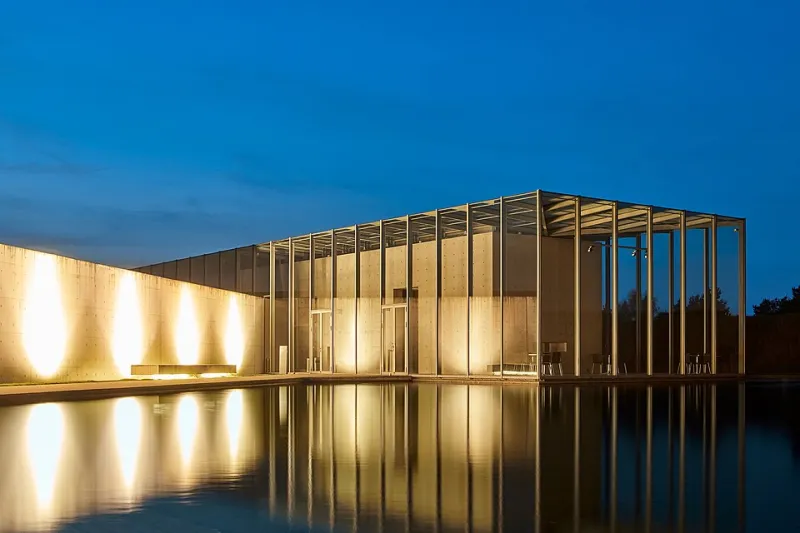
Photo: Joe Mabel, CC BY-SA 3.0, via Wikimedia Commons
Let's be honest about the American small apartment experience: it usually involves a couch that's three inches too wide for the living room, storage solutions that create more visual chaos than they solve, and a nagging sense that you're just tolerating your space rather than actually living in it.
Japanese design philosophy has been solving this problem for a very long time — not because Japanese homes are always small (though many urban ones are), but because the tradition treats space itself as something worth thinking carefully about. The principles that follow aren't decorating tips. They're ways of seeing your apartment differently. And once you see it differently, changing it gets a lot easier.
1. Komorebi: Let Light Do the Work
Komorebi (木漏れ日) is the Japanese word for sunlight filtering through leaves — that dappled, shifting quality of light that feels almost alive. There's no direct English equivalent, which says something about how differently the two cultures relate to natural light.
In small spaces, light is your most powerful design tool and also your most underused one. Before you buy a single piece of furniture, figure out where your natural light comes from and at what times. Then build around it instead of accidentally blocking it.
Try this: Swap heavy curtain panels for sheer linen or woven shades that diffuse light rather than block it. Position mirrors to bounce afternoon sun into darker corners. If you have a window that gets direct morning light, resist the urge to put a bookshelf in front of it — that light is doing more for your space than the storage would.
Worth looking at: Muji's acrylic storage boxes work well near windows because they don't eat light the way opaque containers do.
2. Ma: Respect the Empty Space
We covered ma in more depth elsewhere on the site, but in the context of small apartments it has a very specific application: not every surface needs to be used.
In a 500-square-foot studio, the instinct is to maximize every inch. But that approach often makes spaces feel more cramped, not less. A deliberately empty corner, a clear section of countertop, a stretch of wall with nothing on it — these "gaps" give your eye somewhere to rest and make the rest of the room feel intentional rather than overstuffed.
Try this: Pick one surface in your main living area and commit to keeping it clear for 30 days. Notice how it changes the feel of the whole room.
3. Wabi-Sabi: Stop Waiting Until You Can Afford "Real" Furniture
Wabi-sabi (侘寂) is the Japanese aesthetic of imperfection and impermanence — finding beauty in things that are weathered, handmade, or slightly worn. It's the philosophical opposite of the Instagram-perfect apartment, and it's incredibly liberating for renters.
Your secondhand table with the small scratch is not a problem to solve. Your mix of mismatched chairs can read as curated rather than chaotic if you approach them with intention. The goal isn't perfection — it's authenticity.
Try this: Instead of hiding the things that show wear, lean into them. A well-worn wooden cutting board displayed on your counter, a slightly faded linen throw — these things add warmth that brand-new items often lack.
4. Vertical Thinking
Japanese urban apartments have long prioritized vertical storage because floor space is precious. American apartments are typically designed with horizontal storage in mind — wide, low furniture, sprawling layouts — which actually makes small rooms feel smaller.
Going vertical draws the eye upward, which makes ceilings feel higher and rooms feel larger.
Try this: Replace a wide, low bookshelf with a narrower, taller one. Add a floating shelf above a doorway (they're often wasted space). In the kitchen, use a magnetic knife strip and hanging hooks instead of a knife block and utensil crock eating up counter real estate.
Worth looking at: String Furniture's modular shelving system and Muji's wall-mounted units are both worth the investment for small spaces.
5. Omotenashi: Design for the Experience of Being There
Omotenashi is often translated as "hospitality," but it's really about anticipating needs and creating an experience without being asked. In home design terms, it means thinking about how you actually move through and feel in your space — not just how it looks in a photo.
A lot of small apartment frustration comes from layouts that look fine but function badly. The couch that blocks the natural path from the kitchen to the bedroom. The coffee table you have to squeeze past every time you sit down.
Try this: Walk your apartment's most common routes — from bed to bathroom in the morning, from door to couch after work — and identify anything that creates friction. That friction is your redesign priority list.
6. Multifunctionality as a Design Value
Japanese design has a long tradition of objects that do more than one thing — futons that roll away, low tables that serve as both dining and work surfaces, storage ottomans, benches with lift-top compartments. This isn't a compromise; it's a considered response to how people actually live.
Try this: Audit your single-use furniture. Does your nightstand do anything other than hold a lamp and a water glass? Could your entryway bench also store shoes? The goal isn't to turn everything into a storage unit — it's to make sure the things taking up floor space are earning their keep.
Worth looking at: Floyd's bed frames with built-in storage and Muji's stackable polypropylene drawers that work under beds, in closets, or as standalone units.
7. Engawa: Create a Transitional Zone
The engawa (縁側) is the traditional Japanese veranda — a transitional space between the interior of a home and the outside world. It's a place to pause, to shift mental gears, to leave the outside behind before entering.
American apartments almost never have a dedicated entryway, but you can create the feeling of one even in a studio.
Try this: Define your entry with a small rug, a single hook for your bag and keys, and a place to remove your shoes. Even if it's just a 3-foot stretch of floor near your door, that visual and physical pause changes how you arrive home.
8. Natural Materials Over Synthetic Ones
Japanese design has a deep preference for materials that age gracefully and connect to the natural world — wood, linen, cotton, ceramic, bamboo, stone. These materials also happen to make small spaces feel warmer and more grounded than the laminate-and-polyester combinations that dominate budget furniture.
Try this: You don't need to replace everything. Start with the things you touch most — your bedding, your bath towels, your most-used mug. Upgrading these to natural materials has an outsized effect on how your everyday life feels.
9. Shibui: Subtle Over Showy
Shibui (渋い) describes a particular kind of beauty — understated, restrained, quietly sophisticated. It's the opposite of maximalist decoration, but it's also not sterile. Think of it as the design equivalent of a really well-made, well-fitting piece of clothing that doesn't need embellishment to look good.
In a small apartment, shibui translates to a preference for things that recede rather than demand attention. Furniture that blends into its surroundings rather than competing with it. A color palette that's cohesive without being matchy.
Try this: Before adding anything new to your space, ask whether it adds to the composition or competes with it. Restraint is a skill, and it gets easier with practice.
10. Kanso: Eliminate the Unnecessary
Kanso (簡素) — simplicity and the elimination of clutter — is one of the core principles of Zen aesthetics. Unlike the Western minimalism that sometimes tips into austerity, kanso is about clarity: removing what obscures rather than what exists.
In practice, this means looking at your space and asking what's getting in the way of seeing what you actually love about it.
Try this: Do a "visual noise" audit. Stand in the center of each room and notice what your eye catches first. If it's the pile of mail on the counter or the tangle of cords behind the TV — those are your kanso projects. Solve those first, before buying anything new.
The Bigger Picture
None of these principles require a renovation, a big budget, or starting over. They require a different way of paying attention to your space — noticing how light moves through it, how you move through it, what's earning its place and what's just taking up room.
Japanese spatial philosophy developed in a culture that has always had to do a lot with a little. The wisdom that came out of that isn't about deprivation. It's about precision — knowing what matters and making sure it has the space to matter.
Your apartment, whatever its square footage, is capable of that. It just needs you to start looking at it differently.