Why Getting Dressed Gets Easier When You Stop Buying So Much
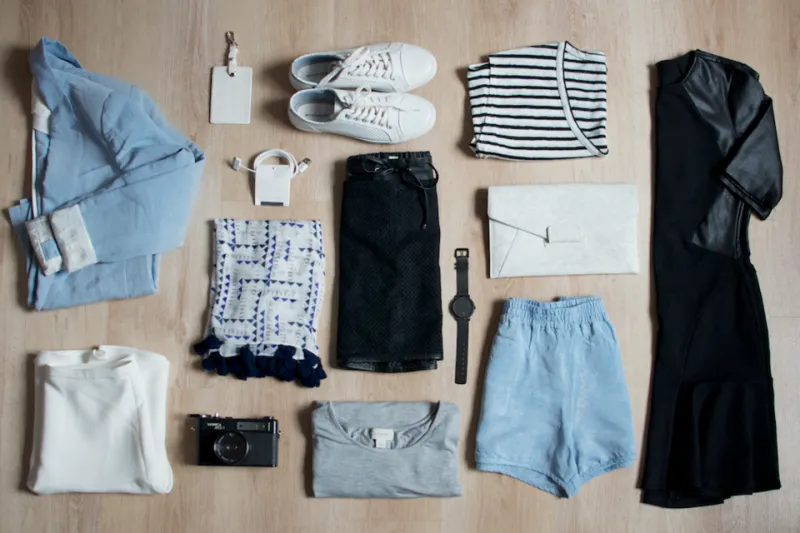
Photo: Geneva Vanderzeil apairandasparediy.com, CC BY 2.0, via Wikimedia Commons
There's a particular kind of frustration that happens when you're standing in front of a closet packed with clothes and still feel like you have nothing to wear. It's not a shopping problem. It's a clarity problem.
American consumer culture has spent decades selling us the idea that freedom lives in abundance — more colors, more cuts, more options. But somewhere between the sale rack and the Sunday-morning panic, that logic starts to fall apart. Because having fifty shirts doesn't make you fifty times more stylish. It just makes Tuesday morning fifty times more exhausting.
The Brain Doesn't Like Too Many Doors
Psychologist Barry Schwartz wrote about this back in 2004 in The Paradox of Choice, and the core idea has only gotten more relevant since. When we're presented with too many options, we don't feel liberated — we feel paralyzed. Every additional choice adds a small cognitive tax. And when you're making those micro-decisions first thing in the morning, before coffee, before anything else, that tax adds up fast.
Decision fatigue is real. It's the same reason some famously productive people — Steve Jobs with his black turtlenecks, or Obama reportedly limiting his suit choices during his presidency — simplified their wardrobes deliberately. Not because they couldn't afford variety. Because they understood that mental energy spent on clothing is mental energy not spent on things that actually matter.
This isn't about becoming a minimalist monk. It's about recognizing that constraint, when it's intentional, is actually a form of freedom.
What a Capsule Wardrobe Actually Is (And Isn't)
The phrase "capsule wardrobe" gets thrown around a lot, usually alongside perfectly lit flat-lays of neutral linen. But the concept is less about aesthetics and more about function.
A capsule wardrobe is simply a collection of clothes where everything works with everything else. The pieces are versatile, they reflect your actual life, and they're things you genuinely like wearing. That's it. It doesn't have to be beige. It doesn't have to be expensive. It doesn't have to look like a Muji catalog — though, honestly, that's not a bad starting point.
The number people often cite is somewhere between 30 and 50 pieces for a full year, including shoes and outerwear. That sounds tight until you realize how many items in the average American closet go untouched for months at a time. Studies suggest people regularly wear only about 20% of what they own. The rest is just visual noise.
Constraint as a Creative Prompt
Here's the part that surprises people: limiting your wardrobe doesn't flatten your style. It often makes it more distinct.
When you're working with a smaller set of pieces, you start to get creative with how you combine them. You stop defaulting to whatever's easiest and start actually thinking about proportion, texture, and layering. The limitations become a kind of creative brief. Designers work this way all the time — restrictions push you toward solutions you wouldn't have found otherwise.
There's also something that happens with quality when you shop less. When you're not constantly buying, you start spending more thoughtfully on the things you do buy. A well-made pair of trousers that fits perfectly and lasts five years is a fundamentally different object than three cheaper pairs that kind of work and pill by the second wash. One of them makes you feel put together every time you wear it. The other three just fill space.
The Practical Side: Your Mornings, Your Money
Let's be concrete for a second. If you build a wardrobe where every piece genuinely goes with at least three others, getting dressed stops being a decision and starts being an assembly. You reach for what feels right that day, and it works — because you've already done the curation work upstream.
The financial math is also worth sitting with. The average American spends over $1,700 a year on clothing, according to Bureau of Labor Statistics data. A lot of that spending is reactive — trend-chasing, impulse buys, replacing things that wore out too fast. A capsule approach flips that. You spend more per item, buy less overall, and end up with a closet that actually serves you.
Less laundering, less organizing, less clutter. Fewer Sunday nights spent dreading Monday's outfit. These are small things, but small things compound.
How to Start Without Starting Over
You don't have to throw everything out and begin from scratch. That's actually the opposite of thoughtful curation — it's just a different kind of impulsive.
A better starting point: pull everything out and ask yourself what you actually reach for. Not what you think you should wear, not what you paid a lot for, not what still has tags. What do you actually put on your body when you get dressed without thinking too hard about it?
Those are your anchors. Everything else gets evaluated against them. Does this piece work with what I already love? Does it fit the life I actually live, not the life I'm planning to live someday?
That last question is the hard one. A lot of closets are full of aspirational clothes — the blazer for the job you might get, the dress for the event you haven't been invited to yet. There's nothing wrong with owning things you love. But a wardrobe built around your real, everyday life is one you'll actually use.
The Quiet Confidence of Knowing What You Wear
There's a particular kind of ease that comes from having a wardrobe that reflects who you actually are. You stop second-guessing yourself in the morning. You stop feeling vaguely guilty about the things you never wear. You start leaving the house feeling like yourself — which, when you think about it, is the whole point of getting dressed in the first place.
More isn't more. Sometimes it's just more to manage. And the best thing you can do for your style — and your mornings — is decide, clearly and intentionally, what you actually need.